Are the Current Rules Adequate? Examining the Limits of Existing Laws and Developing African-Oriented Mechanisms To Regulate Private Forces

By Bamigboye Oluwaseyi Mike and Christopher Kinsey The regulation of private force has often been viewed through a Western lens, overlooking the unique challenges and perspectives of African states grappling with their security challenges. In this article, Bamigboye Oluwaseyi Mike, a lawyer and Ph.D. candidate at Deakin University in Australia, and Kinsey Christopher, a Professor… Read More Are the Current Rules Adequate? Examining the Limits of Existing Laws and Developing African-Oriented Mechanisms To Regulate Private Forces
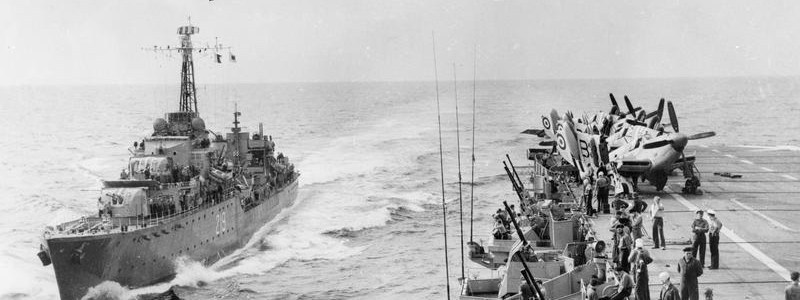
The Royal Navy and Coalition Operations in the Korean War

by Dr Tim Benbow With much attention being devoted to multinational coalition operations, the Korean War (1950-1953) provides an interesting case study.  Ian Bower has just published an edited volume devoted to this subject, to which I contributed a chapter on the Royal Navy. When North Korea invaded South Korea in June 1950, the principal… Read More The Royal Navy and Coalition Operations in the Korean War

‘Losing as Winning:’ Putin’s Developing Narrative of Victory

Dr Chris Tuck A recurring question in the war in Ukraine has been ‘who is winning?’ At the moment, it is clear that, despite the large-scale failure of his initial invasion, Putin still hopes that that a clear-cut military victory can be obtained. But the question of whether further gains or losses on the ground might… Read More ‘Losing as Winning:’ Putin’s Developing Narrative of Victory

The Forgotten Intervention: Operation Intrados, the Musandam Peninsula, and the End of the British Empire in the Gulf

Dr Geraint Hughes Fifty-two years ago the Arabian Gulf was experiencing its own End of Empire. Britain was withdrawing its garrisons from the region, and was preparing Bahrain, Qatar, and the Trucial States (now the United Arab Emirates) for independence by December 1971. Behind this backdrop Headquarters British Forces Gulf (BFG) planned and executed what… Read More The Forgotten Intervention: Operation Intrados, the Musandam Peninsula, and the End of the British Empire in the Gulf

The Perils of Mission Command – A Historical Perspective

Conor O’Neill Mission command is firmly built into UK and Allied military doctrine.  It has become an article of faith that it produces better results as it “…encourages initiative and decentralized decision-making” and thus “promotes…speed of action…”.  UK doctrine argues that the British approach goes further than the Allied one, with use of the concept… Read More The Perils of Mission Command – A Historical Perspective

Credible Commitment Problems In Civil War

Craig Harvey Credible commitment problems are a long-understood challenge in the international environment. They can manifest themselves in a number of ways, but they are generally understood to apply in situations between two or more parties to a conflict who, after years of brutal war, have finally agreed upon a peace settlement. The problem, though,… Read More Credible Commitment Problems In Civil War

Nightingale’s legacy: Women on the COVID ‘frontline’

Hannah West Coronavirus is not only a disease but a human security threat. We are used to seeing the, predominantly male, Armed Forces deploy in response to a conventional security threat. But, the NHS frontline is disproportionately manned by women. Nurses symbolise the frontline of the medical profession in their hands-on capacity caring for patients… Read More Nightingale’s legacy: Women on the COVID ‘frontline’

The advent of the ‘third revolution in military affairs’; is the UK now facing the threat of AI-enabled cyber warfare(?)

Rod Thornton and Marina Miron In respect to China, it seems to be the case that in the United Kingdom the penny has finally dropped. The UK government now sees a threat from having Huawei technology embedded in the country’s communications infrastructure. This may be part of a fundamental reappraisal within the UK of the… Read More The advent of the ‘third revolution in military affairs’; is the UK now facing the threat of AI-enabled cyber warfare(?)